
Finding Your Path
Pathfinder Partners at 20 Years: Some Lessons Learned
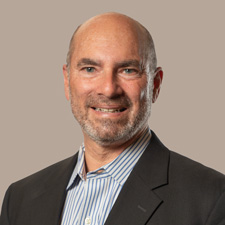
By Lorne Polger, Senior Managing Director
A 20-Year Partnership with Investors
Twenty years ago, we founded Pathfinder Partners on a simple but enduring commitment: disciplined investing, transparency, and true alignment with our investors. From the outset, we focused on protecting investor capital, generating consistent risk-adjusted returns, and navigating both strong and difficult markets in a prudent fashion.
Over two decades, we have invested through multiple market cycles – the Global Financial Crisis, the long recovery that followed, the pandemic, the period of rapidly rising interest rates, and now an environment presenting distressed investment opportunities. Each phase tested different aspects of our strategy and reinforced the importance of patience, discipline, and selectivity. There have been periods when we fully deployed our capital and periods when we chose to wait on the sidelines. Both proved equally important to long-term success.
Six Things That Served Us Well
1. Strong Team and Good Governance Created Stability
Early in our history, we understood both our strengths and our limitations – particularly in underwriting, analytics and asset management. During the financial crisis, when distressed opportunities were abundant but uncertainty was high, we implemented clear investment guardrails across our funds, including well-defined investment return thresholds, tight geographic focus and defined time horizons.
We also strengthened the team by adding professionals whose skills complemented our own and formed an Advisory Council in 2009 comprised of experienced industry leaders. The Council has consistently challenged our assumptions and provided perspective during key inflection points. In several cases, choosing not to invest preserved capital and positioned us to deploy into stronger opportunities during the downturn. In other cases, guidance about leaning in harder and taking a more aggressive posture served us well.
2. Conservative Leverage Protected Investor Capital
During the 2008–2010 financial crisis, many real estate investors faced severe distress driven by excessive leverage and recourse debt. With no legacy portfolio at risk, we chose a different path – moderate leverage and predominantly non-recourse borrowing. This approach allowed us to maintain stability, avoid forced sales, and hold properties through volatile periods. Predictable cash flow and manageable debt levels proved critical in protecting investor capital during uncertain times.
3. Never “Betting the Farm” Enabled Resilience
We have consistently avoided concentration risk – by geography vintage or individual investment. Even strong markets experience cycles, and diversification across regions helps mitigate volatility. We declined large portfolio acquisitions that, while attractive on paper, would have concentrated too much capital in a single area. This discipline reduced the risk of a single investment materially impairing the fund or broader portfolio.
4. Self-Reflection Improved Performance Over Time
Not every investment performed as expected. In one instance, we entered a market where strong demand and limited supply quickly reversed, compressing rents and delaying value creation. We analyzed the trendlines, reassessed our market selection framework and shifted out of that market for new investments. We are continually assessing existing and new markets to maximize risk adjusted returns.
We study both our successes and our setbacks carefully. Continuous learning – combined with empowering our team to grow and evolve – has strengthened our investment process and helped make us better investors.
5. A More Focused Investment Strategy
 In our early years, we invested broadly across residential, industrial, retail, hospitality, land, and development, and across both for sale and rental housing. Over time, performance data made one conclusion clear: our strongest and most consistent results came from improving existing rental housing – particularly suburban workforce housing.
By 2020, we made the deliberate decision to exit non-core strategies and concentrate exclusively on workforce multifamily properties. This sharpened focus has improved execution, reduced risk, and strengthened long-term performance.
6. Investing in People Strengthened the Firm
We have been fortunate to build a team with exceptional longevity. Turnover is one of the greatest hidden costs in any organization, and we have largely avoided it by fostering a culture of accountability, growth, and entrepreneurial thinking. Team members are encouraged to take ownership, accept responsibility, and learn from both successes and failures. This culture has been instrumental in Pathfinder’s durability and progress.
Our Strategic Pivots
Experience has reinforced the importance of focusing on what we do best. Earlier in our history, we explored adjacent strategies that produced mixed results and diluted our competitive advantage. By refining our approach – focusing on markets, asset types, and operating models where we possess deep expertise – we improved the consistency of our performance and our business plan execution.
Following the post-financial-crisis recovery, for example, we shifted toward value-add investments in markets with strong population and job growth rather than pursuing development-heavy strategies. This pivot produced more predictable outcomes and reduced risk exposure during uncertain periods.
What We Might Have Done Differently
One area of ongoing reflection involves capital structure. Since 2007, we have primarily utilized commingled fund structures rather than deal-by-deal syndications. While syndications offer selectivity that some investors prefer, discretionary funds provide portfolio diversification and allow faster execution during periods of market dislocation – such as 2009–2011 and today – when speed and scale are essential.
This is not regret, but perspective. Every structure involves tradeoffs, and the key lesson is ensuring alignment between capital structure, strategy, and market conditions.
Looking Ahead – The Next 20 Years
 While experience is invaluable, long-term success depends on continuity and thoughtful evolution. Through mentorship and leadership development, Pathfinder’s next generation is already assuming greater responsibility across investments, operations, and investor relationships. Our objectives: preserve our culture of discipline while embracing innovation.
Technology, particularly artificial intelligence and advanced data analytics – is rapidly reshaping how we invest and operate. While technology evolves rapidly, the fundamentals remain unchanged: sound judgment, disciplined risk management, and alignment with investors.
If our first 20 years were about building a durable foundation, the next chapter will focus on continuity, disciplined growth, and thoughtful adaptation. Markets will change, cycles will repeat, and new challenges will emerge – but our core principles remain constant:
- Protect investor capital.
- Invest with discipline.
- Adapt intelligently.
- Maintain a long-term perspective.
We are deeply grateful for the trust our investors have placed in us over the past two decades and look forward to continuing the journey together.
Lorne Polger is Senior Managing Director of Pathfinder Partners. Prior to co-founding Pathfinder in 2006, Lorne was a partner with a leading San Diego law firm, where he headed the Real Estate, Land Use and Environmental Law group. He can be reached at lpolger@pathfinderfunds.com.
Share this Article
