
Zeitgeist - News Highlights
The record rent growth of 2021-2022 triggered a historic apartment construction boom. By 2023, nearly 970,000 multifamily units were under construction nationwide – the largest pipeline since the early 1970s, according to the National Association of Home Builders. As those projects delivered in 2024 and 2025, vacancy rose, rent growth stalled and concessions returned to many markets. But that construction peak is now behind us, and the pipeline is rapidly diminishing.
One of the most reliable indicators of future supply is the percentage of a market's existing apartment inventory under construction. According to the National Construction Pipeline report from MMG Real Estate Advisors, at the peak of the construction cycle in late 2023, Austin had 15.6% of its existing inventory under construction, followed by Phoenix (13.1%), Salt Lake City (11.9%) and Denver (9.1%). Today, the picture is dramatically different: every one of Pathfinder's target markets (below) has a pipeline below 5% (several below 3%) of inventory.
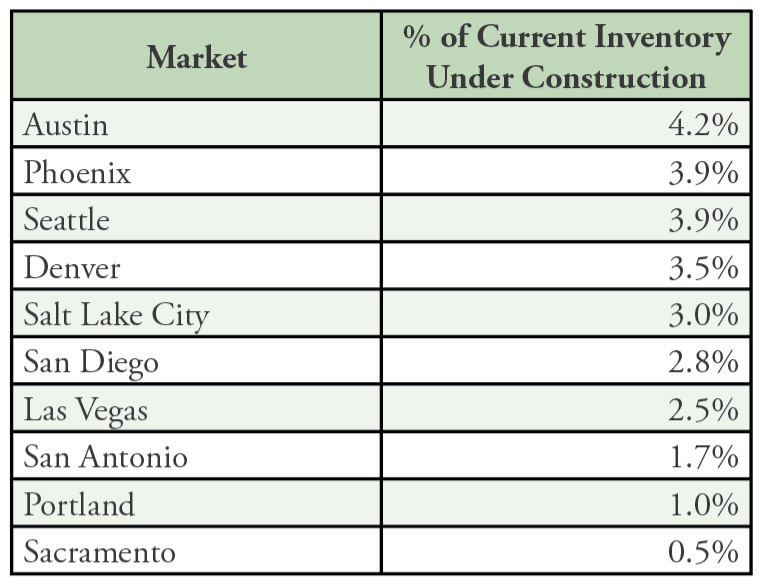
The reasons for the development pullback are well documented: elevated construction costs, expensive debt, cautious lender underwriting and several years of flat (or negative) rent growth. And because the timeline from a developer's decision to build until the first resident moves in is three to four years, today's low construction starts translate into a shortage of new deliveries in 2027-2028 and beyond.
Apartment Demand Outpaces Supply
According to RealPage and CoStar, net apartment absorption exceeded 250,000 units during the first half of 2026, making it one of the highest levels of supply absorption on record. Additionally, demand outpaced new deliveries by roughly 100,000 units, allowing occupancy to recover from the supply wave.
While encouraging, the high absorption doesn’t mean that all markets have completely recovered. Occupancy and rent growth remain below prior-cycle peaks and operators in several markets continue to compete aggressively for residents with concessions. As newly delivered communities continue to lease up, they are capturing a disproportionate share of renter demand, creating a highly competitive environment for other properties.
Strong demand is expected to endure as new renter households continue to form, reflecting the essential nature of apartments. This resilience is being driven by continued household formation, a growing affordability gap between renting and owning (very expensive because of high interest rates and construction costs) and the flexibility apartments offer renters.
For property owners and investors, the takeaway is measured optimism. Challenges remain – including affordability – but the outlook is improving. The historic supply surge is beginning to recede, demand continues to outperform expectations and occupancy continues to strengthen. If these trends persist, improving fundamentals should support greater pricing power and stronger operating performance. The first half of 2026 signals that the multifamily sector is moving in the right direction.
Share this Article

IN THIS ISSUE
CHARTING THE COURSE
Looking Ahead to 2031: Demographic Shifts, Likely Economic Scenarios Bullish for Multifamily Investing
FINDING YOUR PATH
The 2026 Midterms: What Real Estate Investors Need to Know
GUEST FEATURE
Technology Isn’t Replacing Accounting and Finance – It's Elevating It
ZEITGEIST
News Highlights
TRAILBLAZING
Cowles Landing, San Carlos (San Diego), CA
NOTABLES AND QUOTABLES
Simplicity