
Charting the Course
The Pump, the Mortgage Payment, and the Power Bill: How $6.25 Diesel, 7.4% Mortgages and Data Center Backlash Will Shape the Midterms
By Mitch Siegler, Senior Managing Director
 Autumn brings Halloween, falling leaves, the end of daylight savings time and election season – when our mailboxes fill with glossy flyers, our phones buzz with texts from candidates we’ve never heard of, and TV commercials feature grim-faced narrators warning that the other guy is inexperienced, unprincipled, and will undoubtedly raise your taxes and damage your society.
With the midterms just a few weeks away, the candidates are raising cash, and the pundits are parsing polls. If you want to save yourself time and aggravation, fast forward through the cable news panels and look at three household costs: how much to fill a truck with diesel (average U.S. cost over $6.25/gallon), the monthly payment for a home mortgage (30-year fixed rate mortgage rates averaging 7.4%) and the cost to keep the lights on (the typical home utility bill rose 7% in 2025 – and that’s before the additional spikes data centers could bring). Spoiler alert: all three are flashing red.
As Will Rogers famously said, “I don’t make jokes. I just watch the government and report the facts.” In that spirit, here are the facts – and here’s what they could mean for voters next month – and a few implications for markets and investors.
If You Bought It, a Truck Brought It
As the Teamsters say, “If you bought it, a truck brought it.” These days, they might add: “…and included a fuel surcharge.”
The national average price of diesel sits at $6.25/gallon at presstime, per AAA – up 70% from $3.69 a year ago. Here in California, diesel averages $8.35/gallon and some high-traffic stations are $9/gallon. The culprits are familiar: supply route interruptions from the Iran and Russia/Ukraine conflicts boosting crude oil prices above $100/barrel, refinery outages and strategic oil reserve drawdowns.
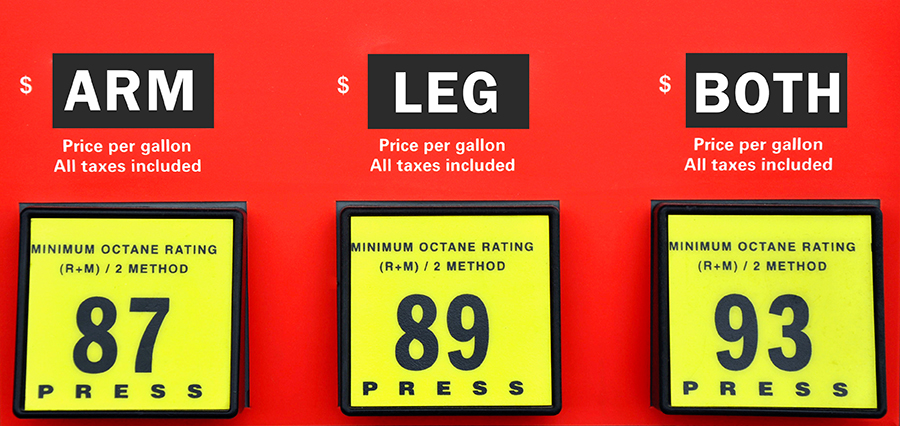
Most voters don’t buy diesel, so why should they care? Because diesel is oxygen for the economy. It powers over-the-road trucks, which haul groceries from farm to shelf, fuels the excavators, bulldozers and backhoes on every construction site and powers the locomotives hauling freight by rail across the country. Consider the math for a long-haul trucker whose rig burns 18,000 gallons a year: a $4.66-per-gallon increase adds $46,000 to annual expenses. That shows up in the price of lettuce, lumber and just about everything in between. And it often comes straight off the truck driver’s income and is the root cause of bankruptcy filings by 16 trucking companies since late August.
Alyssa Barnes, a gas station employee in Los Angeles summed it up to ABC News in a way any voter or elected official could grasp: “All they have money for is filling up. They have to get cash advances and stuff for food. It’s rough.” Rough indeed!
Most voters don’t read the fine print on those glossy election postcards and very few are trained economists. But they sure can read the big, illuminated sign at the corner gas station they pass every day and where they stop at once or twice each week. And they tend to hold whoever’s in charge accountable. In times like these, that means their election analysis may start and end with “throw the bums out.”
The 7.4% Home Mortgage is a Bucket of Cold Water for Housing
If diesel is the pain at the pump, mortgage rates are the pain at the closing table. At press time, the average 30-year fixed rate was 7.40% – up from 6.30% a year ago.
Today’s buyer’s mortgage payment is 17% higher than a year ago. On a $400,000 loan, that adds $280/month ($3,400/year) to the payment. For a young family already stretching to afford a starter home, that’s the difference between “we qualify” and “maybe next year.” Again.
Our kids’ generation has concluded that the most reliable path to homeownership is inheriting one. They’re only half joking. Meanwhile, millions of existing homeowners are sitting on 3% mortgages they have no intention of giving up, which keeps inventory tight and prices stubbornly high. The result is a housing market that feels frozen to everyone except the people already inside the house.
In 1980, Ronald Reagan famously asked voters, “Are you better off than you were four years ago?” For a 32-year-old renter watching mortgage rates and home prices climb, the answer comes fast – and it’s not the answer the party in power wants to hear. Housing affordability has become one of the most potent economic issues of our time and of this election cycle, and candidates are scrambling to offer solutions, many of which would make an economist – or anyone with commonsense – wince.
Housing affordability has been a hot button political issues for much of this century, kicked off by the subprime mortgage crisis, which sparked the 2008 Great Financial Crisis, followed in 2020 by pandemic-era legislation limiting evictions, rent control ballot initiatives in various cities and states and candidates for office centering “affordability” in their campaigns.
Everyone Wants AI – Nobody Wants the Data Center Nearby
The third issue is the one that is activating voters from New York to California and almost everywhere in between. This summer, we wrote about how the AI tsunami would reshape our world in short order. We just didn’t expect it to reshape the midterms.

Data centers – the massive warehouses that power AI – have become a political flashpoint. A recent Gallup survey found that 71% of Americans oppose construction of a data center in their community, and the opposition is remarkably bipartisan: 75% of Democrats, 74% of independents and 63% of Republicans oppose them. In a country that can’t agree on much, that’s a downright consensus – Not in My Backyard (NIMBY)!
Residents worry about higher electricity bills, strained water supplies, round-the-clock noise and job promises that tend to evaporate once construction is completed.
Tip O’Neill’s maxim that “all politics is local” has rarely been truer. Texas, Gov. Greg Abbott – who recently proclaimed the state the “epicenter of AI development” – paused roughly 1,800 project approvals last month. In Ohio, an internal Republican memo reportedly identified data centers as the top issue hurting Sen. Jon Husted’s re-election bid against Sherrod Brown, prompting Husted to introduce legislation requiring tech companies to fund their own electricity infrastructure. In Michigan, the Senate candidates are debating the merits of a one-year data center moratorium as compared with strict new standards on them. Pennsylvania’s Democratic Gov. Josh Shapiro, who once touted a $20 billion Amazon investment, has imposed new statewide restrictions.
Before we crown data centers the defining issue of the 2026 elections, note that fewer than 1% of voters cite them as their top priority. Data centers are a hyper-local issue that can swing a close House race or a state utility commission seat – but it’s another cost-of-living issue in disguise. When the family electric bill jumps and a new data center goes up down the road, voters connect the dots.
Adding It Up
James Carville’s famous 1992 campaign slogan was, “It’s the economy, stupid.” While times have changed, the sign still works – just substitute “diesel,” “mortgages” and “electric bills.”
Don’t take our word for it – the polling backs us up. Emerson College’s September national survey shows Democrats leading the generic congressional ballot 53% to 42%, with President Trump’s approval sitting below 40% (at 39%). The economy is the top issue for 41% of voters; they favor Democratic candidates by 14 points (55% to 41%). Most striking: independents, who broke for Trump in 2024, now favor Democrats by 29 points (60% to 31%).
History shows Midterm elections tend to be an uphill climb for the incumbent party. The president’s party has lost House seats in all but two midterm elections since World War II. Add record diesel prices, 7% mortgages and a bipartisan revolt against data centers, and the headwinds look more like a hurricane.
As Yogi Berra reminded us, “It’s tough to make predictions, especially about the future.” Three weeks is an eternity in politics. A ceasefire or a drop in oil prices could change the conversation.
What It Means for Investors
 Whatever happens on November 3, several things seem likely. Divided government, if it arrives, typically means gridlock – and markets have historically been quite comfortable with that. Fewer sweeping changes means less uncertainty and more predictability.
For multifamily investors, the implications are more constructive than the headlines suggest. As we’ve written extensively, high mortgage rates keep would-be buyers renting longer. And it’s harder to save for a down payment when fuel and utility costs crimp household budgets. Elevated diesel and construction costs make new development harder to pencil, constraining future supply. And the Federal Reserve rarely hikes just once – futures markets see another couple of rate hikes by year-end. And the political pushback on data centers may ultimately slow the growth of electricity demand – or at least shift more of the grid’s costs onto the tech companies rather than households and property owners. Whether consumers pay these costs directly or indirectly (through higher costs for AI tokens) won’t matter all that much to household budgets.
None of this really changes our playbook. We underwrite conservatively, stress-test for “higher-for-longer” interest rates and elevated operating expenses, take the long view and don’t bet the farm on any single regulatory or political outcome.
If election season has you stressed out, here’s more wisdom from writer/philosopher Will Rogers: “Be thankful we’re not getting all the government we pay for.” Whatever your politics, please vote. And if you’re driving to the polls in a diesel pickup, consider carpooling.
Mitch Siegler is Senior Managing Director and Co-Founder of Pathfinder Partners. Prior to co-founding Pathfinder in 2006, Mitch founded and served as CEO of several companies and was a partner with an investment banking and venture capital firm.
Share this Article

IN THIS ISSUE
PATHFINDER PARTNERS GROWTH & INCOME FUND, L.P.
$178,000,000 Recapitalization of Six Apartment Properties
CHARTING THE COURSE
The Pump, the Mortgage Payment, and the Power Bill: How $6.25 Diesel, 7.4% Mortgages and Data Center Backlash Will Shape the Midterms
FINDING YOUR PATH
How Phoenix, Denver, and Austin Got Overbuilt – and Why that Presents Opportunities
GUEST FEATURE
Record Apartment Supply and the Positive Impact for Renters
ZEITGEIST
News Highlights
TRAILBLAZING
The Modern Fitness Center
NOTABLES AND QUOTABLES
Leadership